
What Is a T1 Tax Return and How Does T.U.A File It for You?
Filed by Our Accountants and Our Tax Software
Every employed Canadian, retiree, student with income, anyone over the age of 19, and anyone who owes money to the CRA or expects a refund must file a T1 personal income tax return each year. The Urban Accountant (T.U.A) removes the guesswork from this process entirely. You do not fill out a single form. You upload your documents, and our accountants and our tax software prepare and file your complete T1 return accurately, with your maximum refund guaranteed.
File My T1 Return With T.U.AEvery Deduction Found
Our accountants and our tax software review your full situation and apply every deduction and credit you qualify for, not just a software checklist.
Accurate Filing via the CRA Professional Channel
T.U.A uses the CRA's EFILE system, the same professional filing channel used by accounting firms across Canada.
Confirmation When It Is Done
You receive CRA confirmation that your return was accepted. No checking, no wondering, no stress.
What Is a T1 Return and Why Does It Matter?
The T1 General is Canada's personal income tax return form. It is the document you submit to the Canada Revenue Agency each year to report all the income you earned. This is where you claim any applicable deductions and credits to determine whether you owe additional tax or are entitled to a refund.
A T1 covers all your personal income sources. This includes your employment, self-employment, investment, pension, rental, and foreign income. Think of the T1 as the complete picture you submit to the government, pulling together all your slips and receipts into one final report.
Who Needs to File a T1 Return in Canada?

You are legally required to file a T1 if you owe income tax. However, you should file even if you owe nothing. Filing is the only way to receive the GST/HST credit, the Canada Child Benefit, and various provincial benefits. It also builds your RRSP contribution room for the future. This includes anyone over the age of 19.
In practical terms, if you received a T4, T5, or any other income slip in Canada, you should file. If you made RRSP contributions, paid childcare expenses, made charitable donations, or had any deductible expenses, you must file to claim them.
What Documents Do You Need for Your T1 Return?
Whether you receive a T4, T5, self-employed income, or any other type of income, T.U.A prepares and files your return. When you sign up, you are welcomed with our intake questionnaire. From there, our system software walks you through exactly what documents you are required to submit through the T.U.A app.
The most common documents you need are your T4 slips from all your employers. The T4 slip is a document provided by your employer outlining your total employment income and deductions for the year. You also need T5 slips for investment and bank income, RRSP contribution receipts, and official charitable donation receipts.
What Income Goes on a T1 Return?
The T1 requires you to report all your worldwide income. This means your employment income from all T4 slips, any self-employment income, rental income, and investment income including dividends and capital gains. It also includes pension and CPP/OAS income, RRSP withdrawals, Employment Insurance benefits, and any foreign income you received while you were a Canadian resident.
Many Canadians miss reporting certain taxable amounts because they just do not know they have to. Our accountants and our tax software review your complete income picture to ensure everything is reported correctly and no deductions are missed against that income.
The average Canadian leaves over $400 on the table each year by missing eligible deductions on their T1 return. T.U.A's accountants and our tax software review every line before filing, not after.
What Can You Deduct and What Credits Can You Claim?
Deductions reduce your taxable income, meaning you pay tax on a smaller amount of money. Credits reduce the actual tax you owe directly. The most common deductions include your RRSP contributions, union and professional dues, childcare expenses, and moving expenses if you relocated for work or school. If you are self-employed, you can deduct business expenses, and if you work from home, you can deduct home office expenses.
Our accountants and the T.U.A app software are both trained to review and catch common filing mistakes, ensuring your return is accurate before submission. All previous returns filed with T.U.A are stored in the app, conveniently accessible for you at any time. Identifying and correctly applying all these deductions and credits is exactly where our professional filing adds the most value.
What Are the Most Common T1 Filing Mistakes?
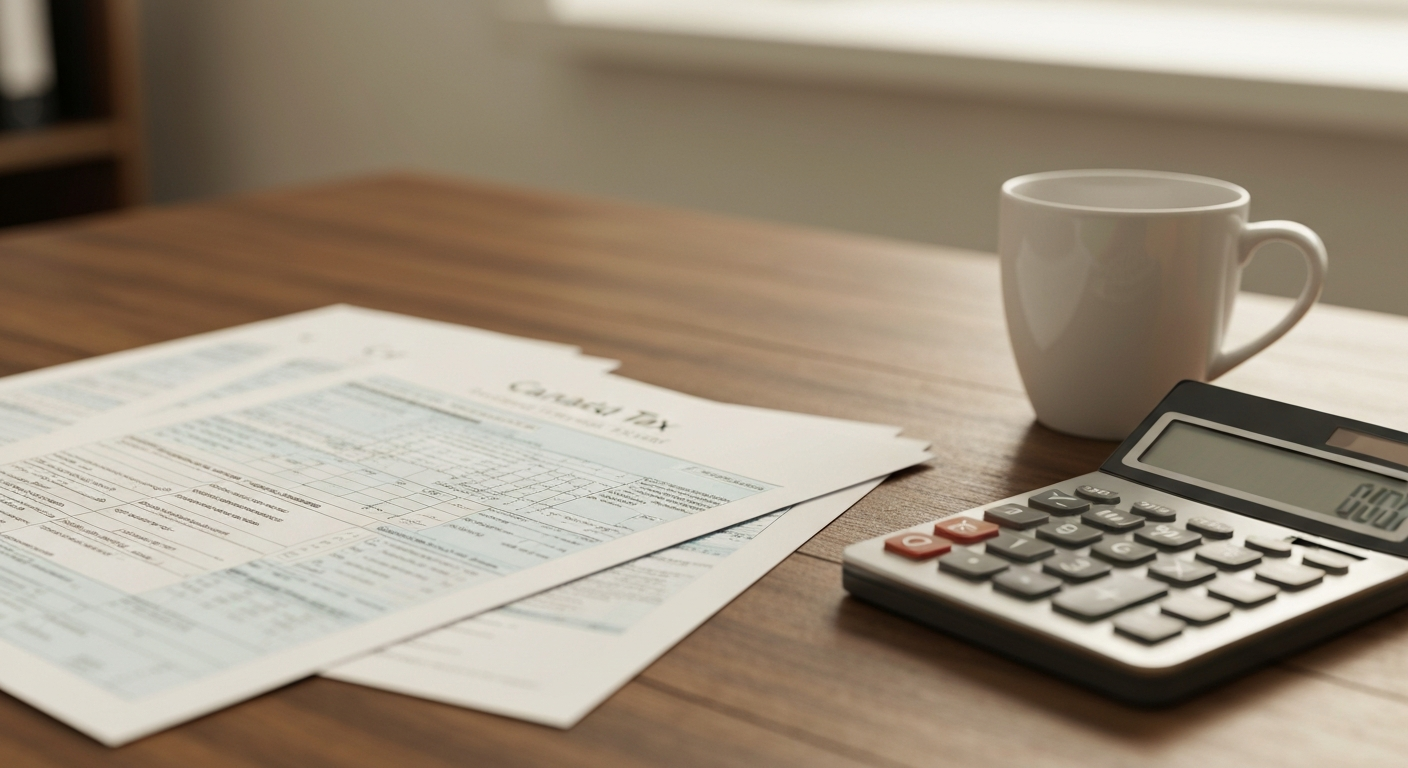
The most common mistake is missing T-slips that arrive late, especially T5s from banks. Many people also forget their RRSP contributions made in the first 60 days of the calendar year, or they do not claim all their eligible medical expenses within the optimal 12-month period.
Other frequent errors include misreporting self-employment income by missing eligible expense deductions, failing to carry forward unused tuition credits, and entirely missing provincial credits. Each mistake results in either a higher tax bill or a CRA review. Our accountants and our tax software are trained to check for all of them on every single return.
What Is the Deadline and What Happens If You Miss It?
For most Canadians, the filing deadline is April 30. For self-employed individuals and their spouses, you have until June 15 to file, but any balance you owe is still due on April 30. Late filing when you owe money triggers a 5 percent penalty on the balance owing, plus 1 percent per month for up to 12 months.
If you have filed late in any of the prior three years, that penalty doubles. Even if you cannot pay the full balance right now, filing on time avoids the late-filing penalty entirely. We recommend you upload your documents at least two weeks before your applicable deadline.
How Do You Check Your Return Status After Filing?
After our accountants and the T.U.A software prepare and file your return on your behalf, you will receive a confirmation reference number in the T.U.A app from the CRA indicating they have received your e-filed return.
You can also check the status through your CRA My Account at canada.ca. Your return status updates from received to assessed once the CRA has processed it. Your Notice of Assessment from the CRA follows within two to four weeks.
Stop Guessing Whether Your T1 Is Right
Our accountants and the T.U.A software prepare your return and file it accurately. Maximum refund guaranteed.
Frequently Asked Questions
Clients upload their tax documents through the T.U.A app. Our accountants and our tax software prepare and file their return on their behalf. T.U.A is not DIY software. It is a professional tax filing service delivered digitally.